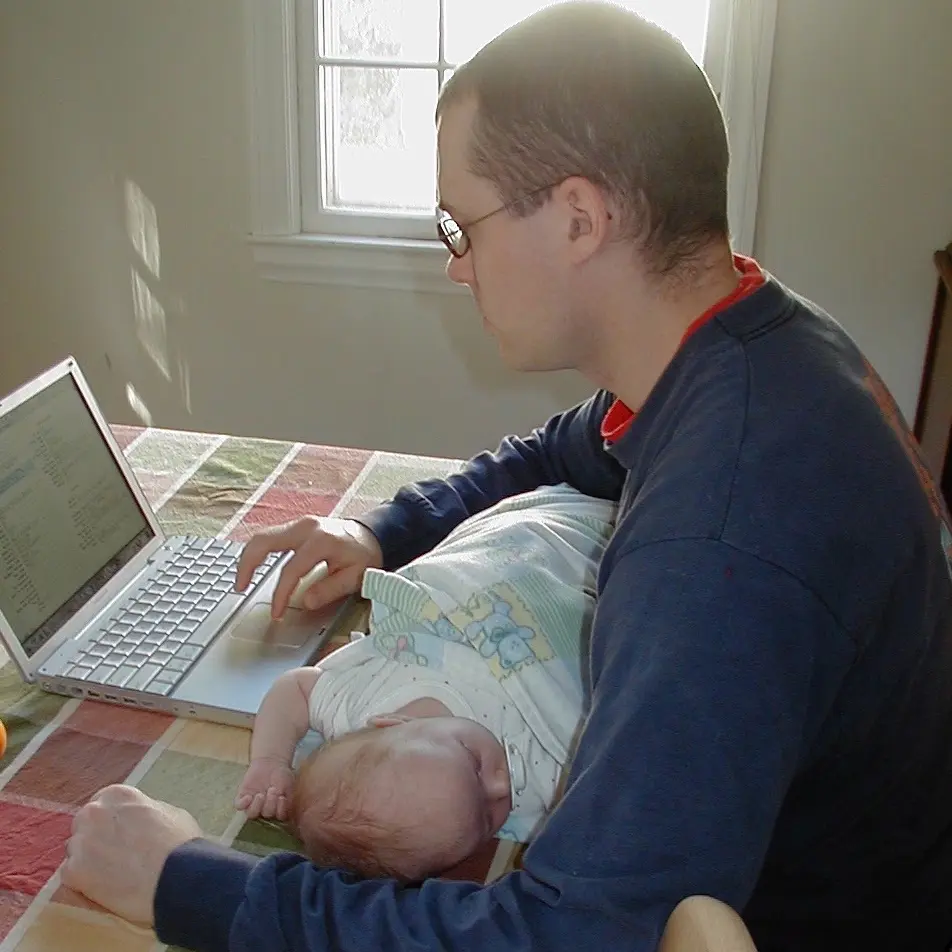
My Daughter’s First Days
Shortly after my daughter was born, near the beginning of my year as a stay-at-home dad, I made a short video of her first days using iMovie. This was long before phones could shoot video with a tap or apps auto-generated “memories.” It took me days to finish, even with my fancy Apple PowerBook G4 and the latest iMovie software. The video brought me much joy and I felt proud sharing it with friends and family.
Not long after, Apple released an update that changed how iMovie worked, and my project would no longer open. The video I had built, the one I could still trim and fix and add to, was gone. I tried different solutions and nothing brought it back. That was when I started to see how little control I held inside the Apple ecosystem.
A New Operating System
From that discomfort, I went looking for something else and found free and open source software (often called FOSS, or just “free software”), which refers to programs anyone can inspect, modify, and share. The code is available for anyone to read, rather than locked away where only the vendor can see it. I didn’t come to free software through lofty ideals. I wanted tools that worked in ways that matched my values, and I wanted to keep what I made.
So I installed an early version of Ubuntu Linux on an old computer in the basement of our house in Madison, Wisconsin. Getting it running took some tinkering. Then I spent a few days trying to make it look and feel like macOS, with only moderate success. I sometimes felt disoriented. The fonts were different. My familiar programs were gone. Slowly, I stopped trying to recreate the past and started noticing the real value offered by these tools.
My first yoga classes felt the same way. Breathing through alternate nostrils felt awkward, sitting still felt unfamiliar, and the shapes we made with our bodies confused me. When the instructor said “up dog,” the voice in my head went, “what’s up, dog?” and I laughed out loud in the middle of class. Yet something in the practice called me back, and the unfamiliar gradually became more familiar. I learned to witness these experiences rather than judge them. I found ease.
Letting Go and Finding Enough
In both of these situations, I left behind something that once comforted me. I practiced aparigraha (non-grasping) by loosening my grip on old habits. I opened to svādhyāya (self-inquiry), asking what I needed. I explored Ishvara pranidhana (surrender) by accepting that not everything bends to my will.
Free software didn’t feel like an upgrade at first. I lost features, convenience, and polish. I ran into bugs and rough edges. But I also began to see what I had gained: software built in the open, by people who wanted to share it. I stopped seeking perfection and found that most of these applications were enough. I learned santosha (contentment).
Yoga, meditation, and breathwork followed a similar arc. At first I treated them like tools for performance and self-improvement. Eventually I recognized them as practices of freedom.
How We Write, Click, and Code
Yoga can teach us how to live in the world. I don’t view the yamas and niyamas as rules to obey. They invite me to look at habits like yelling, drinking, eating meat, or watching violent movies. Sometimes I let those habits go, but on my own terms and in my own time.
Yoga can also teach us how to live with technology, not by prescribing behavior, but by encouraging us to notice our impulses and line up our actions with our values. The practice doesn’t end at the edge of the mat. It can shape how we write, click, and code.
My digital life might look different from yours. I don’t use Facebook, Instagram, or YouTube. I avoid Gmail and most other Google tools. My devices run free software. I write everything in Markdown, from presentations to notes to recipes. I create my own reminders. My laptop and home network block ad trackers, so I rarely see ads.
This isn’t about purity. It’s about choosing tools that match the values I cultivate on the yoga mat and meditation cushion. Most of the software I use comes from people who give their work away and let anyone build on it. That generosity, more than the absence of ads, is what keeps me here.
An Invitation to Reflect
People often move through a yoga practice with care, then hand their digital lives to companies that harvest attention and data. They cultivate santosha (contentment) with the breath, then reach for software designed to stir dissatisfaction. They practice ahimsa (non-harming) on the mat, then rely on tools that harm others and the planet. I have done all three. What might shift if we brought the yamas and niyamas with us into our digital lives?
I don’t expect you to switch operating systems or toss out your phone. My own practice unfolded slowly, over years of trial, effort, and letting go. The benefits have been real and lasting.
When it comes to technology, I invite the same curiosity you bring to the mat. Pause before you open an app. Notice what pulled you there, and ask whether the action reflects what you care about. This path doesn’t require dramatic gestures. Small, intentional steps will carry you a long way. That’s where the practice begins.
Comments1
Software
I admire your goal to use free software and avoiding the use of the major vendors.
I am digitally competent (or an immigrant) but not digitally fluent and suspect that the use of this open source software will result in lesser capabilities or require additional skill.
I also enjoy social media and am not as wary of it.
I'm also aware that you are a technology professional. Did you at some point become overwhelmed with all the tools or have some sort of experience that helped you make this decision to abandon the use of common tools? are you vested in open source tools in some way?
all the best.