Buddhism


Related content
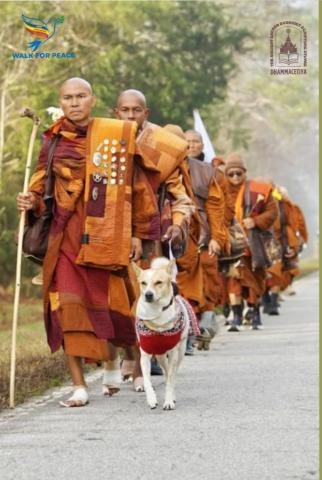
a line of monks in orange walking down a road
Photo courtesy of Walk for Peace
In a time when fear and outrage feel increasingly normalized, a small group of Theravāda Buddhist monks is walking 2,300 miles from Texas to Washington, D.C., sharing a message of peace, loving-kindness, and compassion. They aren’t selling anything or making grand statements. They’re simply walking, day after day, reminding us that peace begins with presence, intention, and care. Their walk draws from the ancient tudong tradition, where walking itself becomes a form of spiritual training. It’s a quiet invitation to practice more kindness, steadiness, and goodwill in our own lives.

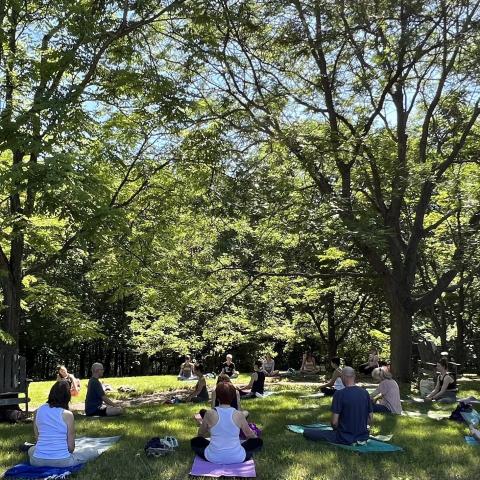
Matthew sitting under trees surrounded by people in a yoga class

On Thursday (October 20, 2022) at 6pm I will be teaching another free yoga class at the Minnesota Arboretum. Whether it's indoors or outdoors, an evening class or a day-long retreat, I always seem to enjoy teaching in the Arboretum. It feels beneficial.

As the years tick by and I continue to go deeper and deeper into yoga, I feel more focused than ever. I prioritize activities like volunteering to teach at the Arboretum and let go of other pursuits. Happiness increases.

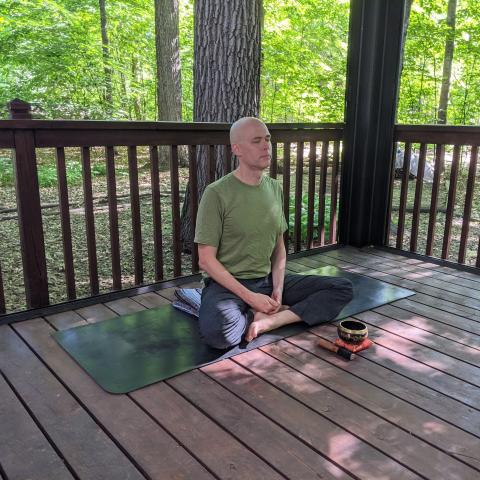
Person in the woods eyes closed with head against a tree

Breath is an ever-present aspect of life, which is part of the reason why "mindfulness of breathing," or ānāpānasati in Pāli, is probably the most common form (object) of meditation. Typically, the practice involves focusing attention on the physical sensations caused by the movement of the breath, the in-breaths and the out-breaths. Mindfulness of breathing is a feeling practice, not a thinking practice.

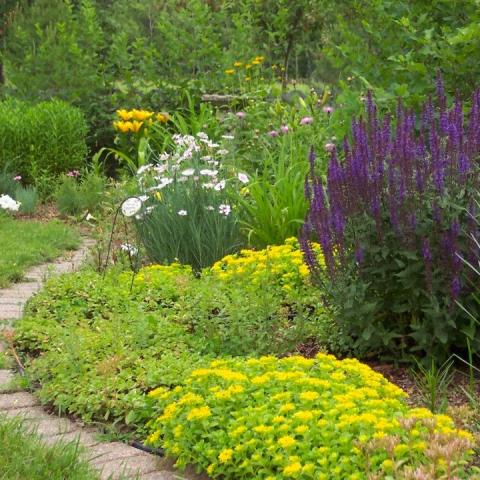
Garden with purple and yellow flowers

Yogis, meditators, mindfulness coaches, Christians, and countless other spiritual seekers commonly employ the metaphor of the garden to represent stewardship. To view the mind as a garden is to view it as a place with potential value and commit to cultivating it. One must locate the space and make effort, which can take a variety of forms. One can tend to the garden of the mind while doing yoga, meditation, or any other activity in life.

Hands over the heart in prayer pose. A little bow of the head. A gesture of respect. An acknowledgment of our shared humanity. And no touching. As people the world over are choosing to ditch the handshakes and hugs for fear of contracting the coronavirus, namaste is becoming the perfect pandemic greeting.
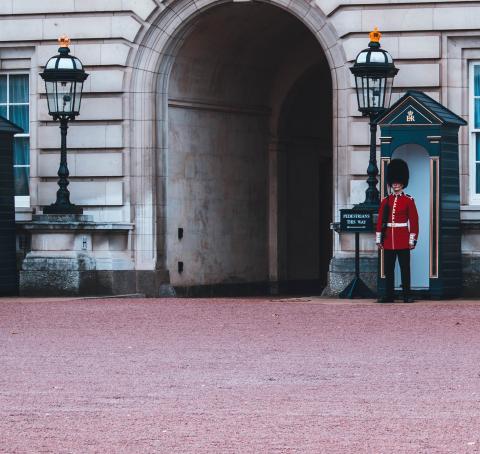
Guard standing by a gate

Mindfulness as a general awareness of the present moment receives a lot of attention these days. This kind of awareness is sometimes labeled "bare attention" or "present moment awareness." Some, however, teach mindfulness as one aspect of a practice that aims to do more. In certain yoga traditions, for instance, the ultimate goal is to still the fluctuations of the mind. Paradoxically, the most effective way to still the mind often requires more than just sitting still, and finding out what methods work requires experimentation. This article explores one method that many people find useful to cultivate mindfulness: the simile of the gatekeeper.

Cover of Ajahn Sumedho Intuitive Awareness

Over the past few decades, Ajahn Sumedho has said much about "intuitive awareness." Most often the Pāli word sampajaƱƱa is translated as "clear comprehension," but Ajahn Sumedho prefers to foreground the notion of "intuitive awareness" as a way to extend and elaborate how we understand this important meditation concept.